Case catalogue: does this image need a label?
22 typical online retail images, classified under the European Commission's guidelines. Every result is computed by the same decision tree as the labelling check.
You mainly need to label AI models, fully AI-generated photorealistic product images, and images that show the product differently, more attractively or in a misleading scene. Background removal, dust retouching, format adjustments and a purely decorative AI background behind a real product generally do not need a label under the guidelines (paras. 92, 116).
| Case | Situation | Result |
|---|---|---|
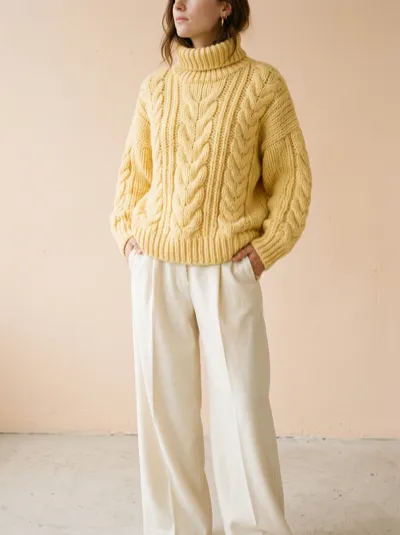
| AI model wearing your clothes | You photograph your clothes on a mannequin or laid flat. An AI tool adds a realistic model who does not exist. | Labelling required |
| Product photo generated entirely by AI | Product, lighting and setting all come from the AI. The image looks like a photograph. | Labelling required |
| Colour variant made with AI | You photograph one colour and let the AI recolour the other variants. You have not compared the images with the real goods. | Labelling required |
| AI scene showing size or use | The product photo is real, the scene comes from AI. It shows the product in use and can make its size, function or place of use look wrong. | Labelling required |
| Real room, furniture added by AI | The room photo is real. The AI furnishes the empty room and places furniture, rugs and your products in it. | Labelling required |
| Accessories added with AI | The AI adds accessories, parts or other products to a real product photo. Or it removes something that belongs to the product. | Labelling required |
| Skin retouching for cosmetics | A real model presents your skincare product. The AI smooths the skin, and that very skin is meant to show what the product does. | Labelling required |
| A model's face or body changed | A real model was photographed. The AI replaces the face or clearly changes body shape, skin colour, age or facial features. | Labelling required |
| Print-on-demand mockup made with AI | An AI tool places your design on a photo of a blank item and renders the printed item anew. You have not compared it with a real sample. | Labelling required |
| AI art print or poster for sale | You sell photorealistic AI images as posters. The image is itself the work the customer buys. | Required, lighter form |
| Real product in an AI lifestyle scene | The product photo is real. The AI builds a scene around it in which the product is used. Size and effect are accurate. | Labelling recommended |
| AI images from a manufacturer or supplier | The manufacturer supplies the product images. You know, or can see in the metadata, that it used AI. You did nothing with AI yourself. | Third-party image, recommended |
| Agency uses AI without your instruction | You commissioned an agency to produce campaign images. You did not decide on the use of AI; the agency chose it itself. | Third-party image, recommended |
| AI image created before 2 August 2026 | An agency created AI images to your specification in June 2026. You have the dated invoice. | Legacy image |
| Real product on an AI background | The product photo is real and unchanged. The AI only replaces the background with a decorative surface or setting. | Not required under the guidelines |
| Background removed with AI | The AI removes the background of a real product photo. What remains is the product on white or on a transparent background. | Not required under the guidelines |
| Passers-by or cables removed | The AI removes distractions unrelated to the product, such as a passer-by, a cable or a stain in the background. | Not required under the guidelines |
| Dust and lint retouched | The AI removes specks of dust, sensor spots and single bits of lint that got into the shot. The product stays as it is. | Not required under the guidelines |
| Image format extended with AI | You need a landscape format for a banner. The AI adds space on the left and right that continues the existing background. | Not required under the guidelines |
| AI upscaling and colour correction | The AI enlarges a product photo, sharpens it, removes noise or corrects colour and brightness. The product then looks as it does in reality. | Not required under the guidelines |
| Comic or illustration with fantasy characters | AI draws a comic-style banner of a dragon making tea. Your product is not depicted realistically in it. | Not required under the guidelines |
| Product photo without AI | You take your own photos and edit them conventionally, without an AI tool. Camera automatics or filters without AI do not count as AI. | Not an AI image |
For cases not listed here, the labelling check asks the same questions about your image. All cases as a dataset: faelle.json.
Sources
Para. refers to the paragraph number in the European Commission's guidelines on Article 50, C(2026) 5054.
- Commission Guidelines on the transparency obligations under Article 50 AI Act, C(2026) 5054 finalEuropäische Kommission · Commission · 20 Jul 2026
- Regulation (EU) 2024/1689 (AI Act)EUR-Lex · Law · 12 Jul 2024
- Code of Practice on Transparency of AI-Generated Content (final version)Europäische Kommission · Code of practice · 10 Jun 2026
Read next
 AI-generated
Do I need a label?
A few questions from the EU guidelines, answered with a citation.
OpenBasicsWhen AI images need a label
Article 50 AI Act in plain words, with the exceptions.
ReadBasics
What a deep fake is
Where image editing ends and the obligation begins.
ReadIn your store
AI images in online stores
Where the label goes: product page, card, zoom, feed.
Read
Label your first AI image
Free in your browser, with the EU icon and text in 24 languages. On Shopify, the app labels your whole store.