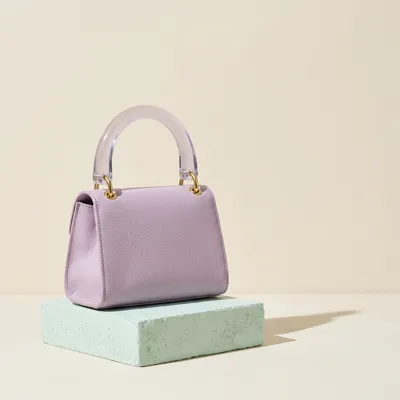
Yes. A photorealistic AI image resembles objects that exist or could exist, and consumer goods are named explicitly (para. 113 ii and iii). The guidelines give an AI product image that can affect how the product is perceived as an example of a deep fake (example box after para. 116). The image needs a visible label under Article 50(4) of the EU AI Act, for example “AI” with the words “AI-generated”.
Labelling required
A photorealistic AI image resembles people, objects, places or events that exist or could exist. Under the guidelines that is enough. They name an AI product image that can affect how the product is perceived as an explicit example.
Rn. 113 ii · Rn. 114 · Beispiel nach Rn. 116
This classification follows the European Commission's guidelines on Article 50 AI Act. The guidelines are not binding; only the Court of Justice of the EU can interpret the law bindingly. You make the decision.
The example
A fragrance store has a text prompt generate a bottle on marble with backlight and drops of water. No real photo of the bottle exists. The image becomes the main picture on the product page and in Google Shopping.
The answers in the labelling check
- Was an AI tool used to create or change this image?
Yes - Who used the AI tool?
Me or someone on my team - When was the image created or last changed with AI?
On 2 August 2026 or later - What did the AI do to this image?
It generated the whole image. - How does the image look to someone seeing it for the first time?
Like a real photo or recording - Is the image itself part of an artwork, satire or fiction, and is that immediately obvious to everyone?
No, it is an advertising or product image
Adapt these answers in the labelling check
When the result changes
- If the AI only replaces a purely decorative background behind a real product photo, a label is generally not required under the guidelines (real product on an AI background).
- For a clearly unreal image, such as a comic, that does not show the product realistically, a label is not required under the guidelines (para. 113 ii, illustration).
- If the image looks like a real painting, labelling is recommended, because artworks count as objects too (para. 113 iii) and the guidelines leave the case open.
- If the image is itself the artwork you sell, a lighter form is possible (AI art print).
What to do
- Put the label on the image, visible without a click, including on product cards, in search results and in banners (para. 143).
- Compare shape, colour, material and size with the real goods. If the image shows the product as nicer than it is, the label does not make it acceptable (para. 129, Recital 137 AI Act, Section 5 of the German Unfair Competition Act, UWG).
- A store overlay does not travel into feeds and ads outside your store, so add the label there yourself (see Google Merchant Center).
- Keep the metadata of the AI file (C2PA, IPTC) as proof of origin.
How the disclosure can read

 AI-generated
Label: AI · AI-generated
AI-generated image
This image was entirely generated with artificial intelligence (AI). It is not a photograph.
Create the text in 24 languages · Add the label to the image
Frequently asked questions
Does photorealism alone decide?
No. Under the guidelines a high degree of photorealism makes a deep fake more likely but is not decisive (para. 114).
Is the marking in the AI tool's metadata enough?
No. Deployers cannot rely on it, because people do not perceive it immediately (para. 117).
Sources
Para. refers to the paragraph number in the European Commission's guidelines on Article 50, C(2026) 5054.
- Commission Guidelines on the transparency obligations under Article 50 AI Act, C(2026) 5054 finalEuropäische Kommission · Commission · 20 Jul 2026
- Regulation (EU) 2024/1689 (AI Act)EUR-Lex · Law · 12 Jul 2024
- Code of Practice on Transparency of AI-Generated Content (final version)Europäische Kommission · Code of practice · 10 Jun 2026
- EU icons for labelling AI-generated contentEuropäische Kommission · Commission · 24 Sept 2026
- German Act against Unfair Competition (UWG)gesetze-im-internet.de · Law · 27 Sept 2026