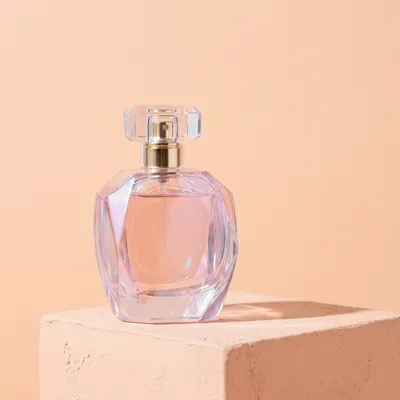
Yes, as long as you have not compared the variants with the real goods. If it is not certain that the product looks like the image, the image can mislead about the product, and the guidelines name this case explicitly as a deep fake (example box after para. 116). If you compared every variant detail by detail, the labelling check returns “recommended”. If the colour is off, the image can be misleading even with a label (para. 129).
Labelling required
If it is not certain that the product looks like the image, the image can mislead about the product. The guidelines name exactly this case as a deep fake.
Beispiel nach Rn. 116
The label meets the labelling obligation. It does not allow showing the product differently from how it is. That can be misleading under competition law, with or without a label. Check whether you can use a real photo.
This classification follows the European Commission's guidelines on Article 50 AI Act. The guidelines are not binding; only the Court of Justice of the EU can interpret the law bindingly. You make the decision.
The example
A store sells a ceramic vase in sand, sage and terracotta. Only the sand vase was photographed, and the AI recolours the photo to the other two colours without a check against the real glazes.
The answers in the labelling check
- Was an AI tool used to create or change this image?
Yes - Who used the AI tool?
Me or someone on my team - When was the image created or last changed with AI?
On 2 August 2026 or later - What did the AI do to this image?
It created or changed the product itself, such as shape, colour, material, surface, size or details. - What did the AI do with the product?
It changed the appearance: colour, shape, material, surface, gloss, wrinkles, size or details - Does the product in the image look exactly like the product the customer receives, in every detail?
Not sure - Is the image itself part of an artwork, satire or fiction, and is that immediately obvious to everyone?
No, it is an advertising or product image
Adapt these answers in the labelling check
When the result changes
- If every variant matches the goods in a detailed comparison, labelling is recommended, because with a product changed by AI an effect on perception can never be fully ruled out (para. 116).
- If the AI only corrected brightness or white balance, that is standard editing (upscaling and colour correction).
- Arranging real photos of several variants side by side has only a minor impact, so a label is generally not required under the guidelines (para. 116).
What to do
- Compare each AI variant with the real goods in daylight. If the colour is wrong, photograph the variant for real.
- If you use the image, add the “AI” label with the words “AI-modified” to every variant image, including in the variant picker and on product cards.
- Record whether and how you checked the variants.
How the disclosure can read
 AI-modified
Label: AI · AI-modified
AI-modified image
This photo was modified with artificial intelligence (AI). Modified: the product's appearance.
Create the text in 24 languages · Add the label to the image
Frequently asked questions
The colour really exists. Why is this a deep fake?
Because the image shows a product that was never photographed like that. The guidelines explicitly name an AI product image that shows the product as not identical to the real one as a deep fake (example box after para. 116).
Does an ordinary colour correction need a label too?
Generally not. The guidelines list minor colour corrections as standard editing (para. 92) with a minor impact (para. 116). A product colour that differs from reality, however, is a change of content.
Sources
Para. refers to the paragraph number in the European Commission's guidelines on Article 50, C(2026) 5054.
- Commission Guidelines on the transparency obligations under Article 50 AI Act, C(2026) 5054 finalEuropäische Kommission · Commission · 20 Jul 2026
- Regulation (EU) 2024/1689 (AI Act)EUR-Lex · Law · 12 Jul 2024
- Code of Practice on Transparency of AI-Generated Content (final version)Europäische Kommission · Code of practice · 10 Jun 2026
- German Act against Unfair Competition (UWG)gesetze-im-internet.de · Law · 27 Sept 2026