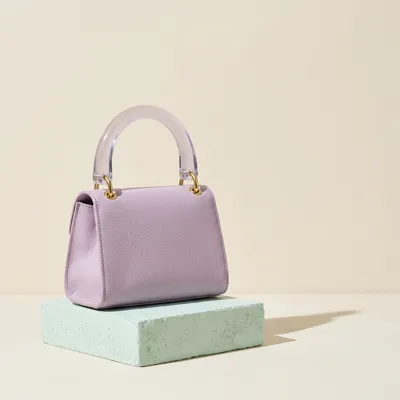
Yes, a label under Article 50(4) of the EU AI Act is required. Under the guidelines, a real product on an AI background is only not a deep fake if the ad is not likely to mislead about the product's representation, characteristics and use (example box after para. 116). If the scene can create a false impression of size, function or place of use, that line is crossed. The label does not make a misleading image acceptable, though (para. 129).
Labelling required
A real product in front of an AI background is only not a deep fake if the ad does not mislead about the product's representation, properties and use.
Beispiel nach Rn. 116
This classification follows the European Commission's guidelines on Article 50 AI Act. The guidelines are not binding; only the Court of Justice of the EU can interpret the law bindingly. You make the decision.
The example
A store sells a battery-powered lamp. The AI puts the real product photo on a camping table in the rain by a mountain lake, where the lamp lights up the whole scene. It is not made for rain, and it is not that bright.
The answers in the labelling check
- Was an AI tool used to create or change this image?
Yes - Who used the AI tool?
Me or someone on my team - When was the image created or last changed with AI?
On 2 August 2026 or later - What did the AI do to this image?
It generated, replaced or extended the background or setting. - What does the new background show?
The product in use, with a size comparison, an effect, accessories or at a specific real place - Could the scene create a false impression of the product?
Yes - Is the image itself part of an artwork, satire or fiction, and is that immediately obvious to everyone?
No, it is an advertising or product image
Adapt these answers in the labelling check
When the result changes
- If size, function and effect are demonstrably accurate, labelling is recommended (AI lifestyle scene).
- For a purely decorative background, a label is generally not required under the guidelines (AI background).
- If the AI places accessories or parts in the picture that are not included, a label is also required (accessories added).
What to do
- If the image shows the product as bigger, brighter, tougher or more versatile than it is, use a scene that shows it as it is, or a real photo of it in use (Section 5 UWG, Recital 137 AI Act).
- For an AI scene that fits the product, put the “AI” label with the words “AI-modified” on the image, wherever it appears.
How the disclosure can read

 AI-modified
Label: AI · AI-modified
AI-modified image
This photo was modified with artificial intelligence (AI). Modified: the surroundings.
Create the text in 24 languages · Add the label to the image
Frequently asked questions
I did not intend to mislead anyone. Does that matter?
No. Under the guidelines the assessment is objective and does not require any intention to deceive (para. 114).
Which scenes count as saying something about the product?
Scenes that concern size, fit, function, place of use, effect or what is included, for example with a size comparison, accessories or at a specific real place.
Sources
Para. refers to the paragraph number in the European Commission's guidelines on Article 50, C(2026) 5054.
- Commission Guidelines on the transparency obligations under Article 50 AI Act, C(2026) 5054 finalEuropäische Kommission · Commission · 20 Jul 2026
- Regulation (EU) 2024/1689 (AI Act)EUR-Lex · Law · 12 Jul 2024
- Code of Practice on Transparency of AI-Generated Content (final version)Europäische Kommission · Code of practice · 10 Jun 2026
- German Act against Unfair Competition (UWG)gesetze-im-internet.de · Law · 27 Sept 2026